How Long Does Concrete Take to Cure in Texas Weather?
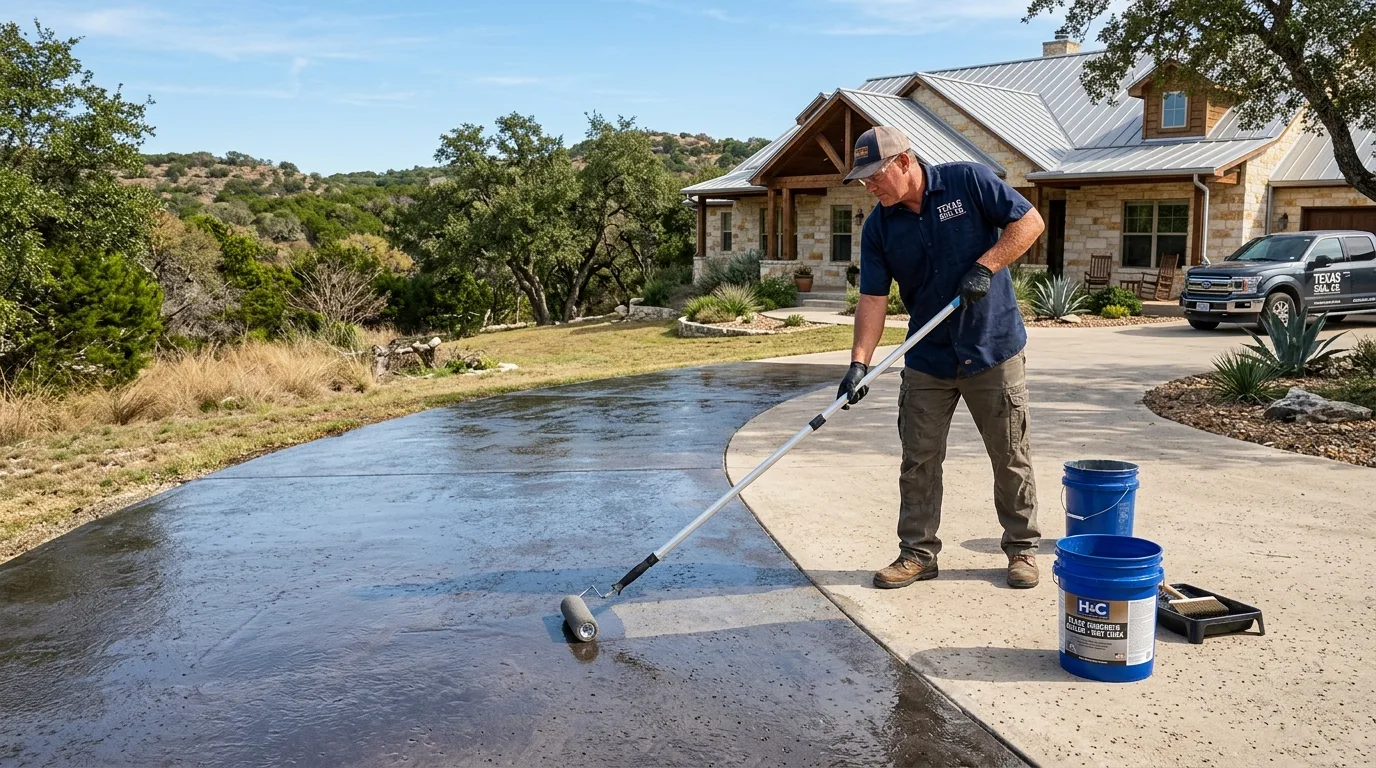
One of the most common questions homeowners ask after a new concrete pour in Sansom Park is how long they need to wait before using it. The answer depends on what you mean by “cured” and what you intend to do — foot traffic, vehicle traffic, and heavy loads have different cure requirements, and Texas weather directly affects how quickly the process proceeds. In this post, we cover how concrete curing actually works, what “cured” means at different stages, how North Texas conditions affect the timeline, and the practical rules for when you can use your new driveway, patio, or slab.
We’ll cover the basic curing science, the 24-hour, 7-day, and 28-day milestones, summer vs. winter curing differences in Sansom Park, and what happens when curing is rushed or interrupted.
Questions About Your New Concrete in Sansom Park?
Sansom Park Concrete will walk you through every step including curing guidance. Free estimates available.
How Concrete Curing Actually Works
Concrete doesn’t “dry” in the traditional sense — it cures through a chemical reaction called hydration. When water contacts cement, a series of crystalline compounds form within the concrete matrix, creating the interlocking crystal structure that gives concrete its strength. This process requires water to continue — which is why curing (maintaining moisture in the fresh concrete) is important, and why premature drying is damaging.
In North Texas’s summer heat, the risk is rapid evaporation. When surface moisture evaporates faster than the hydration reaction can proceed, the surface layer hardens first while the interior is still developing strength. This creates a weak, poorly bonded surface layer that is prone to scaling, dusting, and premature wear. The precautions contractors use in Sansom Park summer — early morning pours, retarder additives, wet curing blankets, curing compound — all serve to slow evaporation and keep water available for hydration.
In winter, the risk is the opposite: freezing water in fresh concrete physically disrupts the crystal formation before adequate strength has developed. Concrete that freezes before reaching 500 PSI is permanently damaged.
Curing Milestones: 24 Hours, 7 Days, 28 Days
24 hours: Fresh concrete has reached initial set — it’s solid and you can walk on it carefully, avoiding concentrated loads. At this point, strength is roughly 16–20% of final 28-day design strength. No vehicle traffic. No loads concentrated on edge sections.
3–7 days: Concrete has reached approximately 50–70% of design strength. Light foot traffic is fully appropriate. You can remove forms at 24–48 hours and the slab is functional for most residential pedestrian use. Still no vehicle traffic for a full driveway in most specifications.
7 days: Standard minimum before light vehicle traffic (passenger cars) on a residential driveway in the Fort Worth area. At 7 days, concrete is typically at 65–70% of 28-day design strength — strong enough for the loads of a passenger vehicle with typical wheel-contact area.
28 days: Full design strength. Concrete gains approximately 99% of its 28-day strength by this point. After 28 days, the slab can handle its full design load — including heavier vehicles for driveways specified for heavy use.
Note on continued strength gain: Concrete actually continues gaining strength beyond 28 days for months to years, but the rate slows dramatically. 28 days is the practical standard for “fully cured” in construction specs.
How North Texas Summer Heat Affects Curing in Sansom Park
Sansom Park’s summer temperatures (95°F+ in July–August) accelerate the early stages of curing but increase the risk of surface defects if moisture isn’t maintained.
Accelerated surface hardening: In high heat, the surface of fresh concrete can set within 1–2 hours of finishing rather than the 2–4 hours typical at 70°F. This shortens the finishing window for contractors — one reason why summer pours start before sunrise and require experienced crews.
Plastic shrinkage cracking: If the evaporation rate from the surface exceeds the rate at which bleed water rises to replace it, the surface dries and cracks before the concrete has adequate tensile strength to resist. These “plastic shrinkage cracks” appear within hours of finishing and are a permanent defect — they can be filled but not reversed.
What contractors do in summer: Early (pre-sunrise) start times, retarder additives to extend the working window, shade or wind breaks if feasible, and wet curing blankets or curing compound applied immediately after finishing to lock in moisture.
Practical effect on timeline: Hot-weather curing with proper precautions doesn’t significantly accelerate the cure to full strength — it primarily mitigates the defect risk. The 7-day vehicle traffic recommendation still applies in summer; don’t try to drive on it after 3 days because it’s been hot.
New Concrete Pour Coming Up in Sansom Park?
We provide full curing guidance for every project. Free estimates for driveways, patios, and slabs.
How North Texas Winter Affects Curing
Sansom Park winters are mild by national standards, but periodic freeze events (temperatures below 32°F) require attention for concrete pours scheduled in November–February.
The 500 PSI threshold: Concrete that reaches 500 PSI before freezing temperatures are not significantly damaged by freezing. At residential 3,500–4,000 PSI specs with standard cement, reaching 500 PSI takes approximately 24 hours at 50°F, or longer as temperatures drop. Below 40°F, the reaction slows significantly.
Accelerator additives: Calcium chloride added to the mix speeds the hydration reaction in cold weather, helping the concrete reach 500 PSI faster before overnight temperatures drop. Non-chloride accelerators are available for rebar-reinforced work where chloride can accelerate corrosion.
Insulating blankets: After finishing in marginal temperatures, insulating concrete blankets trap the heat generated by the hydration reaction, keeping the slab warm for the critical early hours.
Practical guidance: In Sansom Park, avoid scheduling pours when overnight lows are forecast below 32°F within 24 hours of the pour, unless cold-weather precautions are budgeted for. See our seasonal concrete guide for the full seasonal breakdown.
Practical Uses: Rules for Using New Concrete
- Walk on it: 24 hours minimum; 48 hours is more comfortable margin
- Drive a passenger car on it: 7 days minimum
- Park a car on it for extended periods: 14–28 days recommended
- Heavy truck or equipment: 28 days minimum; some commercial specs require 28-day strength verification before heavy loads
- Apply sealer: Wait 28 days minimum for full cure before first sealer application
- Stamped concrete sealer: Often applied by the contractor after 24–48 hours (initial sealer), with a permanent UV-protective sealer at 28 days
Cost Factors
Curing isn’t a separate line item on most residential concrete quotes — it’s included in the standard installation process. The exceptions are specialized hot-weather or cold-weather curing measures:
- Retarder additives: adds $50–$150 to a standard driveway pour
- Insulating blankets (winter): adds $100–$300 to a driveway project
- Extended wet curing (burlap and water): adds $50–$200 in labor
These costs are trivial compared to the cost of surface defects from improper curing — fixing plastic shrinkage cracking or cold-weather scaling requires resurfacing at $3–$7/SF.
Frequently Asked Questions
Can I drive on my new Sansom Park driveway in 3 days if the weather has been hot?
No. While hot weather accelerates early hardening, 3-day strength is still only 60–65% of the 28-day design strength for most mixes. Vehicle traffic on concrete at this stage risks cracking, especially near edges and at control joints. Wait the full 7 days for light vehicles.
What if it rains right after my concrete is poured in Sansom Park?
Rain within the first 2 hours after finishing is the most damaging — it can wash away the surface cement paste. Light rain after the surface has hardened (2–4 hours) is less damaging and may actually help curing by maintaining surface moisture. After 24 hours, rain has little negative effect and can contribute positively to the curing process.
Does Sansom Park’s clay soil affect how concrete cures?
The clay soil is beneath the concrete and doesn’t directly affect the curing chemistry above it. However, clay that is wet at the time of the pour can introduce excess moisture at the bottom of the slab, potentially affecting the water-cement ratio of the lower portion. This is one reason proper base preparation (compacted gravel that drains well) is important — it prevents wet clay from directly contacting fresh concrete.
Related reading: best time to pour concrete in Sansom Park | clay soil and concrete guide | concrete cost guide
New Concrete in Sansom Park — Done Right
Proper curing is part of every project we do. Free estimates for driveways, patios, and slabs in Tarrant County.