Best Time of Year to Pour Concrete in Fort Worth / Sansom Park, TX
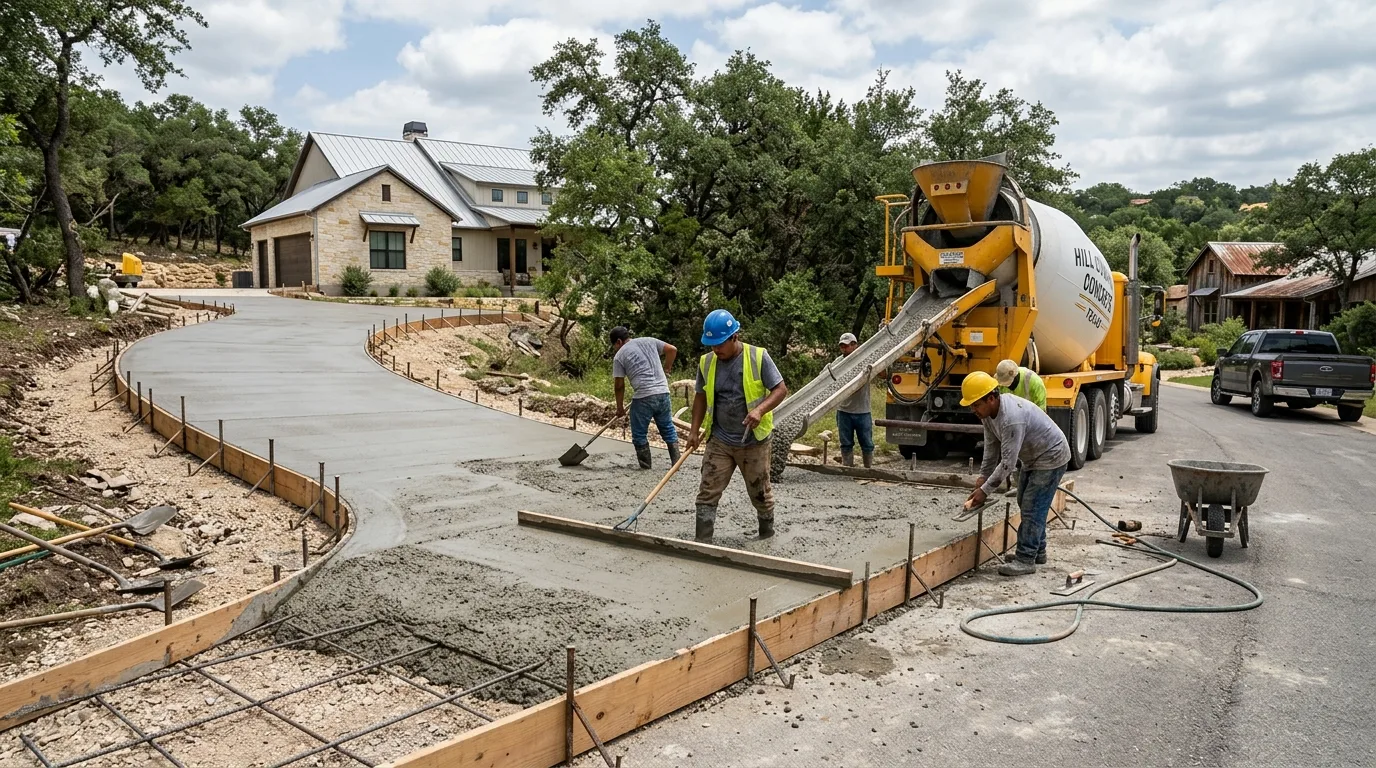
Concrete curing is a chemical process, and temperature directly controls how well it works. Pour concrete on a 100°F July afternoon in Sansom Park without precautions, and the surface will dry too fast, trapping moisture and creating surface defects that shorten the slab’s life. Pour below 40°F in a January cold snap, and you risk freeze damage before the concrete gains enough strength to protect itself. Knowing when to schedule your pour — and what it takes to work in off-season conditions — can make the difference between a 30-year driveway and a 5-year repair call.
In this guide, we cover each season in Sansom Park and the Fort Worth area: what’s ideal, what’s workable, and what requires extra precautions or should be avoided entirely.
Schedule Your Sansom Park Concrete Project
We'll help you pick the right pour window for your timeline and project type. Free estimates available.
Why Seasonal Timing Matters for Sansom Park Homeowners
Sansom Park has a humid subtropical climate with hot summers (95°F+ through July and August), mild winters, and active spring storm seasons. Concrete needs a sustained temperature range of roughly 50–90°F and adequate moisture to cure properly through the first 28 days. North Texas weather tests both ends of that range, often in the same month.
Understanding the seasons lets you plan better, schedule when contractors are less rushed (and sometimes offer better pricing), and avoid the surcharges and quality risks that come with extreme-weather pours.
Spring: March–May — The Best Window
Spring is the prime concrete season in Sansom Park. Daytime highs in the 60–80°F range create ideal curing conditions, humidity supports surface moisture retention, and there’s no need for temperature-management additives or equipment.
The risk in spring is severe weather. April and May are peak tornado and hailstorm months across the Fort Worth area. Heavy rain on freshly poured concrete can wash out the surface cement paste and ruin the finish — and rain during the first 24 hours after finishing is the most damaging. Scheduling a pour for spring means watching the weather radar closely the day before and day of. Any responsible contractor will delay a pour if significant precipitation is forecast within 24 hours.
Spring scheduling tip: book your project in March or early April to avoid the mid-May storm peak. The weather window is excellent and contractor availability is better than the summer rush.
Summer: June–August — Workable With Precautions
Concrete can absolutely be poured in Sansom Park summer — but it requires specific precautions, and skipping them is how summer pours fail.
6 AM start times: In July and August, pours should begin at or before sunrise. The concrete truck arrives when air temperature is in the low-to-mid 70s. By the time finishing work is complete, the afternoon heat has not yet peaked. Afternoon summer pours in triple-digit heat are a quality risk.
Retarder additives: Concrete retarders slow the set time so that finishers have adequate working time before the concrete becomes unworkable. This is standard practice for summer pours in North Texas.
Wet curing blankets: After finishing, wet burlap or curing blankets prevent moisture from evaporating too quickly. Rapid evaporation in summer creates plastic shrinkage cracks — visible surface cracks that appear within hours of finishing and weaken the top layer.
Chilled water or ice: On extremely hot days, the mixing water can be chilled or ice can be added to the concrete truck to lower the fresh concrete temperature and extend working time.
Summer pricing note: summer is the busiest season for outdoor concrete work in North Texas despite the challenges. Scheduling may be harder, and some contractors add a summer surcharge for the additional labor and materials required for heat management.
Timing Your Sansom Park Project
We work year-round with proper seasonal precautions. Tell us your timeline and we'll plan accordingly.
Fall: September–November — The Second Best Window
September through November is the other ideal window for Sansom Park concrete. Temperatures return to the 60–80°F range, storm risk drops significantly compared to spring, and contractors often have better availability after the summer rush.
September can still see high temps in the upper 80s and low 90s — not extreme, but warm enough to warrant an early start and attention to curing. By October and November, conditions are nearly perfect: cooler mornings, mild afternoons, low storm probability.
Fall scheduling tip: early October is arguably the single best time of year to schedule a concrete project in the Sansom Park area. Weather is ideal, contractor availability is reasonable, and pricing is standard.
Winter: December–February — Avoid Below 40°F
Winter pours in Sansom Park are possible but carry real risk. The main concern is freeze damage: if concrete drops below 32°F before reaching 500 PSI (roughly the first 24 hours), water inside the concrete can freeze, expand, and physically damage the developing crystal structure. The result is a slab that looks fine on the surface but is weaker and more prone to spalling and cracking.
Cold-weather precautions when temperatures are in the 40s include: accelerated curing mixes (calcium chloride added to the mix to speed up set), insulating blankets over the finished surface, and heating the subgrade if it’s frozen. These add cost but make winter pours viable for urgent projects.
Below 40°F air temperature, concrete work should be postponed unless a heated enclosure is constructed over the pour area — which is generally cost-prohibitive for residential flatwork.
Winter scheduling note: winter is the slowest season for Sansom Park concrete contractors. If you have a project that doesn’t have a timing constraint and you’re willing to plan around cold snaps, you may get slightly better pricing and faster scheduling in January or February.
Practical Uses: Seasonal Guide Summary
- Driveways: Best in spring or fall; summer with early-morning scheduling; winter only above 40°F
- Patios: Same as driveways; stamped concrete finishes are particularly sensitive to temperature extremes
- Foundations/slabs: Same seasonal rules; more critical because structural work has higher stakes
- Repair and resurfacing: Overlays and patch materials have tighter temperature windows — typically 50–90°F and no rain forecast for 24+ hours
The Process: How We Manage Seasonal Conditions
Sansom Park Concrete monitors weather forecasts for a full week before scheduled pours. Summer pours start before sunrise, use retarder additives appropriate for the forecast high, and finish with wet curing compound applied immediately after floating. Winter pours use heated mix water when temps are below 45°F and insulating blankets when overnight lows are forecast below 40°F. Spring pours get a same-day radar check before the truck rolls — any significant precipitation in the 24-hour window is cause to reschedule.
Cost Factors Related to Season
Summer pours: add $0.25–$0.75/SF for early-morning scheduling, retarder additives, and wet curing. Winter pours in marginal temperatures: add $0.50–$1.00/SF for accelerator additives and insulating blankets. Spring and fall pours: standard pricing with no seasonal surcharge.
See our full concrete cost guide for Sansom Park for complete pricing breakdowns.
Frequently Asked Questions
Can I pour a concrete driveway in Sansom Park in December?
Yes, if temperatures are consistently above 40°F during the pour and for the following 24 hours. December in the Fort Worth area averages highs in the 50s, which is workable. Watch the overnight lows — if freezing temps are forecast within 24–48 hours of the pour, reschedule or plan for insulating blankets.
What happens if it rains right after my concrete is poured?
Rain during the first 2 hours after finishing is the most damaging — it can wash away the surface cement paste and ruin the finish. Light rain after the surface has hardened (2–4 hours depending on temperature) is much less damaging and can even help with curing. After 24 hours, rain has little to no negative effect.
Does summer heat really affect how long concrete lasts?
Yes. Surface curing defects from rapid evaporation in summer heat create micro-cracks in the surface layer that let water penetrate more easily. Over time, especially through freeze-thaw cycles in North Texas winters, water that enters through surface cracks expands and accelerates deterioration. Proper hot-weather curing practices prevent these defects and significantly extend slab life.
Related reading: concrete cost in Sansom Park | concrete patio vs. stamped concrete | how long concrete takes to cure in Texas
Ready to Schedule Your Sansom Park Concrete?
We'll help you plan the right timing for your project. Free written estimates for driveways, patios, and slabs.